B2B shops

Two ways to sell to dealers. Only one of them fits you.

A shop with a real checkout, or a catalogue with an enquiry route. Getting that choice wrong costs more than building either one — so it is the first thing we work out, not the last.

The first decision

Checkout, or enquiry.

Everything else follows from this one. Most of the money wasted on B2B projects is spent building the half that turned out not to be needed.

Route A

Shop with checkout

Dealers log in, see their own prices, and order without talking to anyone. Your sales team stops taking down order numbers and starts doing the part only they can do.

Right when

  • Your prices follow a rule you could write down
  • Dealers reorder the same things regularly
  • Your range is settled enough to stay online
  • The bottleneck is capacity, not the relationship
Route B

Catalogue with enquiry

Prospects browse the full portfolio, assemble a selection and send one enquiry. Your sales team keeps the conversation and quotes the price — but starts it several steps further in.

Right when

  • Every price is negotiated in the end anyway
  • Minimum quantities and lead times vary per customer
  • You are winning new dealers, not only serving existing ones
  • The first conversation is where you add value

Not sure which one you are? That is normal, and it is the first thing we work out on the call — usually in about ten minutes, and usually the answer surprises nobody once it is said out loud. Some companies end up with both: a catalogue for prospects and a shop for the dealers they already have.

What we build

Twelve parts. You will not need all of them.

Each one is marked for the route it belongs to. Anything marked for the route you did not choose is money you do not have to spend.

  • BothDealer accounts with approvalNobody sees dealer content or dealer prices until you have approved the account by hand.
  • BothSeparate public and dealer viewsThe same product looks different depending on who is logged in — one catalogue, two audiences.
  • ShopNet prices per customer groupEvery dealer sees their own conditions, without a spreadsheet anyone has to keep current.
  • ShopTiered pricing by quantityThe price drops at the quantities you set, and the dealer sees where the next step is.
  • ShopMinimum quantities and packaging unitsOrders that cannot be fulfilled never get placed, which saves the call that cancels them.
  • ShopOrder history and one-click reorderMost B2B orders are last month’s order again. This is the single feature dealers ask for most.
  • CatalogueWish lists and saved selectionsA prospect builds their assortment over several visits without losing it in between.
  • CatalogueOne enquiry from a full selectionThe enquiry arrives with the products, the quantities and the notes already in it.
  • BothProduct data your team can maintainAdding a product should not need us. Changing a price certainly should not.
  • BothSpec sheets and artwork to downloadDatasheets, images and packshots where the dealer looks for them, not attached to an old email.
  • BothSeveral languages for export marketsFull translation with its own URLs per language, so each market can be found in its own.
  • BothA clean handover to your other systemsOrders and enquiries out as a file or straight into what you already run. No double entry.

Product pages carry more weight in B2B than anywhere else, because nobody is buying on impulse — they are checking whether it is the right article. What that looks like in practice has its own page.

Route B, built and running

A catalogue for people who are not customers yet.


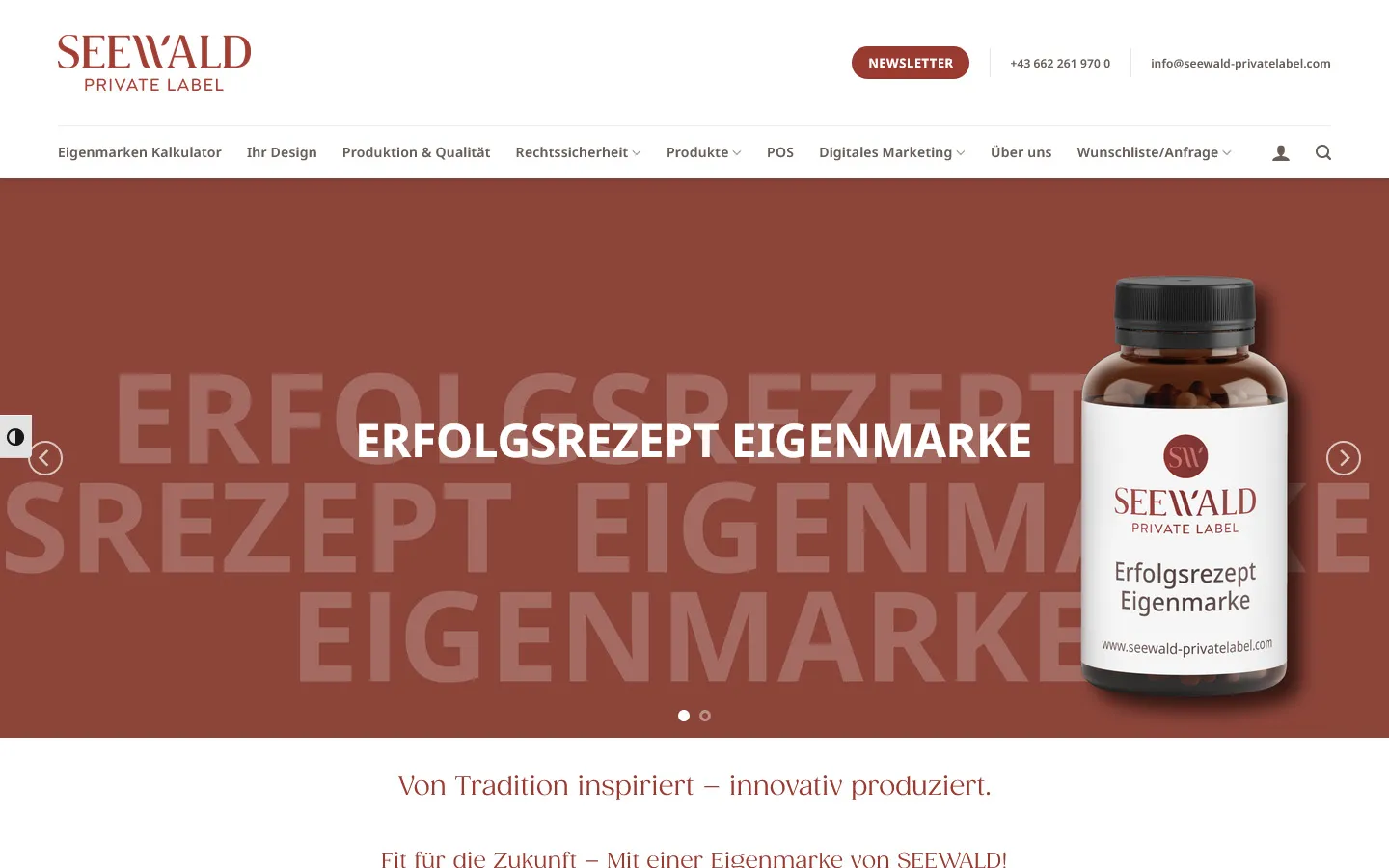
SEEWALD Private Label product catalogue
  • 120products in the catalogue
  • 5years in our care
  • EUmarkets served

“The first question used to be: what do you actually carry? Today the full portfolio is online, and the enquiry arrives with a specific selection already made.”

Michelle Eckerstorfer

SEEWALD Private Label

Read the case

There is no checkout on this site, and that is deliberate — every price is negotiated. The catalogue runs in German; we build in whatever languages your markets need.

Tell us how your dealers order today.

By phone, by email, from a PDF price list, or from a spreadsheet somebody keeps updating. Whatever it is, that is the starting point — and it usually answers the first question on this page by itself.